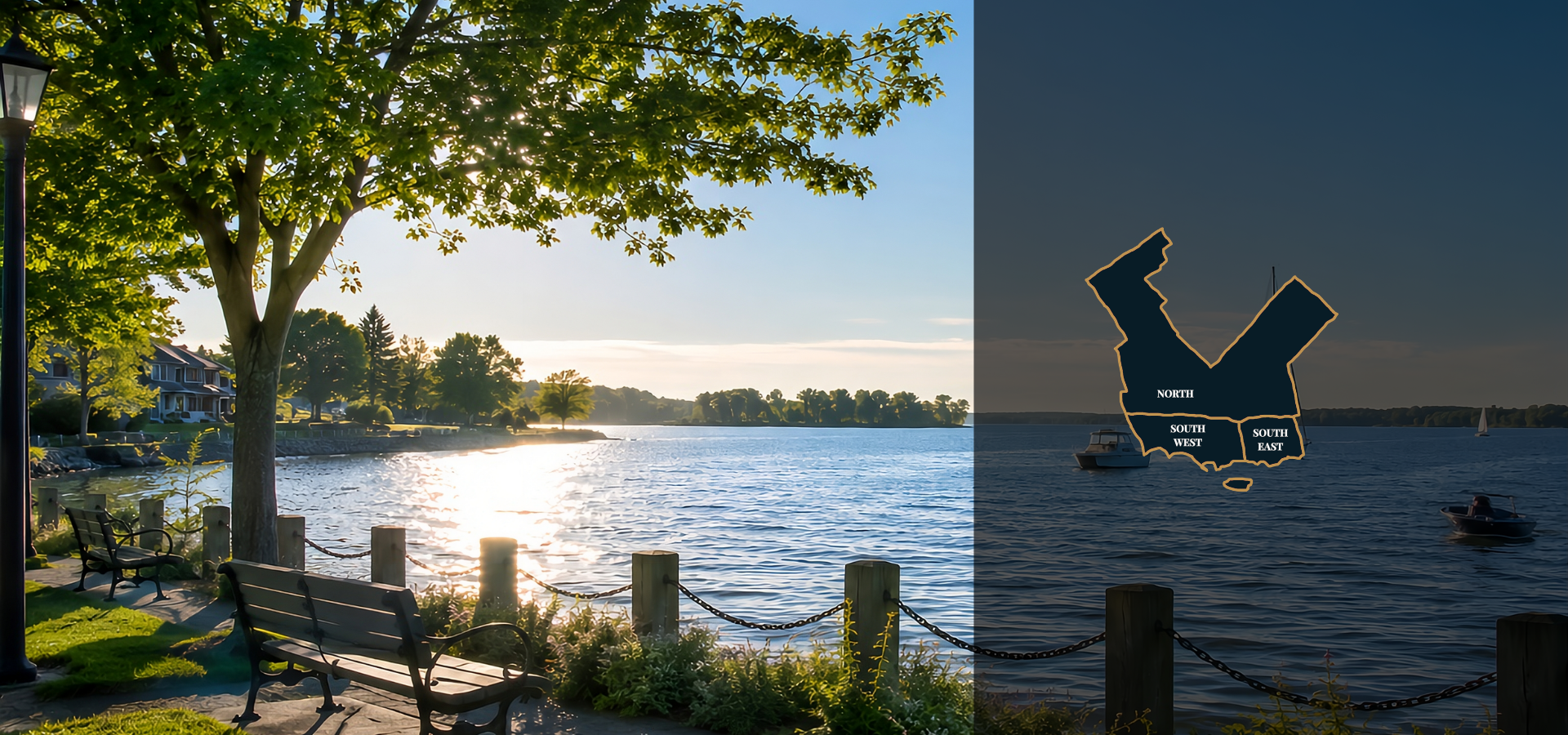
- Waterfront access along Lac Saint-Louis and the exclusive Dorval Island enclave
- Mature residential streets alongside a more urban, walkable character
- Green spaces and parks throughout the city

Dorval occupies a different position in the West Island hierarchy than its neighbours to the west — and that’s precisely what makes it interesting. With a population approaching 20,000 and a density nearly double that of Baie-d’Urfé or Beaconsfield, Dorval is the most urban expression of West Island living: a city with real mixed-use character, a broader range of housing types, and an accessibility story that no other West Island municipality can match. For buyers who want proximity without isolation, Dorval delivers.
The housing stock reflects that diversity. Single-family homes still account for nearly half of all dwellings at 47%, but Dorval also has a meaningful condo and low-rise apartment presence — 37% of buildings are under five floors, with another 10% in mid-rise — giving the market a range of entry points that simply doesn’t exist in more exclusively residential communities nearby. That mix translates to a broader buyer and renter pool: at 60% ownership and 40% rentership, Dorval has the most balanced tenure profile on the West Island, which supports liquidity and consistent transaction volume across market cycles.
The income profile is wider here too. While 19% of households earn over $150,000, the larger concentration of mid-range incomes means Dorval functions as both a move-up market and a genuine point of entry into West Island ownership — something increasingly valuable as prices in Beaconsfield and Baie-d’Urfé push first-time and mid-range buyers further afield. The 25–44 age cohort, at 25%, is notably higher than in neighbouring municipalities, signalling an active younger ownership base that tends to drive renovation activity and neighbourhood reinvestment over time.
Location remains Dorval’s defining asset. Direct highway access, proximity to the airport corridor, and some of the shortest commute times to downtown Montréal on the Island give it a practical appeal that transcends any single buyer profile. Add the Dorval Island enclave — one of the most quietly coveted waterfront addresses in the entire region — and you have a municipality with more range, more liquidity, and more upside potential than its quieter neighbours to the west might suggest.
| Population | |
|---|---|
| Population | 19302 |
| Population density | 923/km² |
| Age Distribution | |
|---|---|
| Under 15 years | 14% |
| 15–24 years | 11% |
| 25–44 years | 25% |
| 45–64 years | 29% |
| 65+ years | 21% |
| Housing Type | |
|---|---|
| Single-family homes | 47% |
| Semi-detached or row houses | 6% |
| Buildings under 5 floors | 37% |
| Buildings 5+ floors | 10% |
| Household Income | |
|---|---|
| Under $60,000 | 39% |
| $60,000 – $80,000 | 14% |
| $80,000 – $100,000 | 11% |
| $100,000 – $125,000 | 10% |
| $125,000 – $150,000 | 8% |
| Over $150,000 | 9% |
| Languages Spoken | |
|---|---|
| English | 59% |
| French | 27% |
| Other languages | 14% |
| Housing Tenure | |
|---|---|
| Owners | 60% |
| Renters | 40% |
Source: Statistics Canada, 2021 Census. Data compiled from Centris Community Profile.
Dorval typically attracts:
Thinking of Buying or Selling in Dorval?
Dorval’s market has more range than almost anywhere else on the West Island — from entry-level condos to waterfront estate properties on Dorval Island, each segment trades on its own dynamics. What’s true for one part of the city may be entirely different a few streets over. Christopher works in Dorval regularly and can give you a precise read on where the market stands right now and what it means for your next move.